Patient Safety Commissioner Publishes Annual Report 2025-26
Updates
-

Redress is about more than compensation, it’s about patient safety
Read more: Redress is about more than compensation, it’s about patient safetyThe harm caused by pelvic mesh and valproate represents some of the most serious patient safety failures in recent NHS history. Both caused avoidable, life-changing harm on a large scale, with patients not always receiving the right information to make informed decisions about their treatment, failures in post-market surveillance and patients’ concerns too often being dismissed. Valproate, while a vital treatment for some patients with epilepsy, migraine and bipolar disorder, can cause devastating harm to an unborn child when taken during pregnancy. The effects of prenatal exposure can be complex and lifelong, leaving many children, young people and adults unable…
-

One size fits no one: why women’s health could be the defining test for AI in healthcare
Read more: One size fits no one: why women’s health could be the defining test for AI in healthcareI recently joined leaders from healthcare, technology, research and investment at the Milken Institute Asia Summit panel AI’s Health Care Promise: Getting It Right for Everyone. It was a timely discussion about how we can harness the benefits of artificial intelligence while ensuring it improves care for everyone, not just some. One theme stood out: the question is no longer whether AI will play a role in healthcare. It already does, but the challenge is making sure it works safely, fairly and transparently for everyone. That mirrors what we heard through the National Commission into the Regulation of AI in…
-
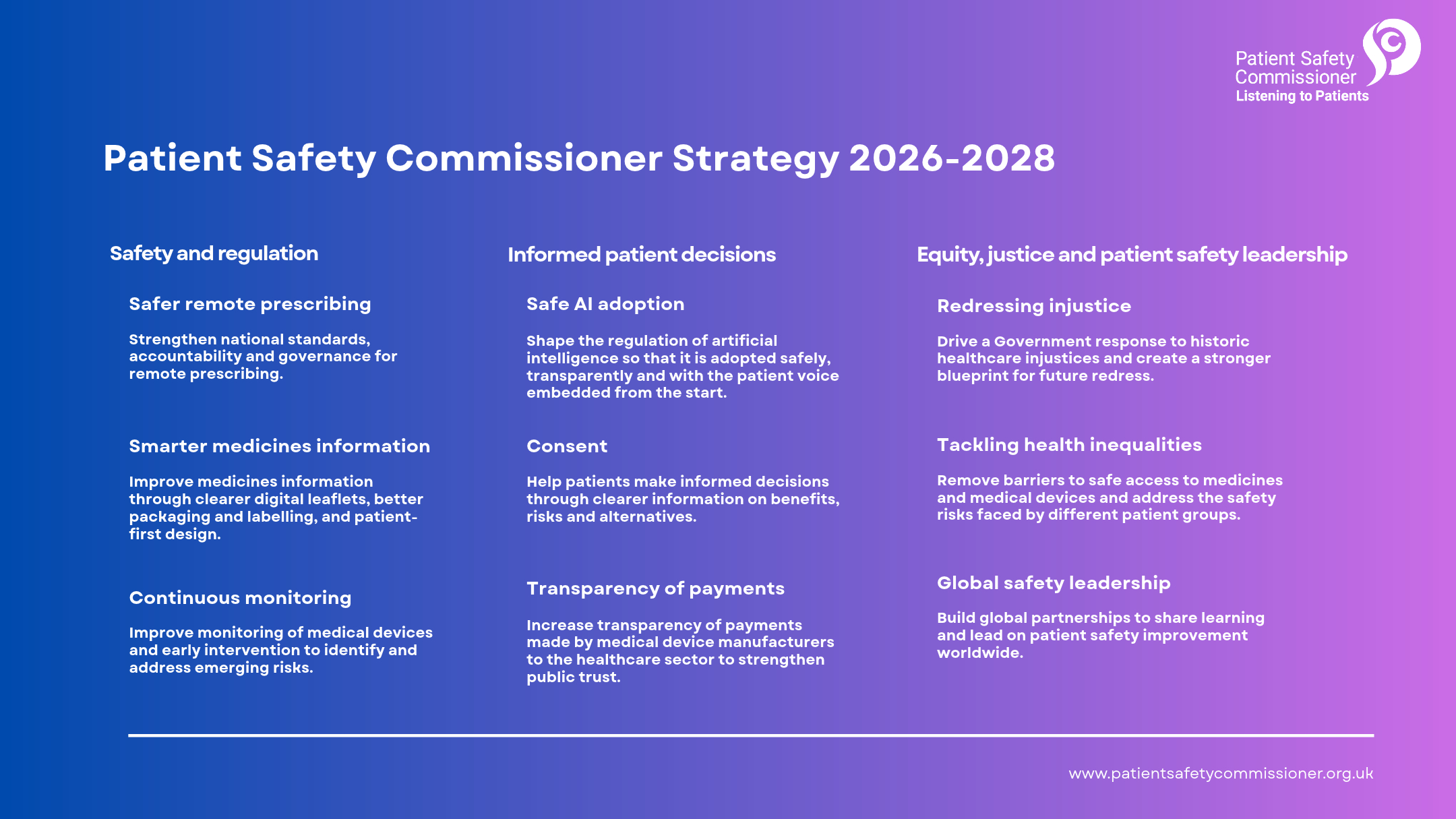
Patient Safety Commissioner launches strategy for second term
Read more: Patient Safety Commissioner launches strategy for second termThe Patient Safety Commissioner for England has today published her strategy for 2026-2028, setting out an ambitious programme of work to make medicines and medical devices safer and ensure patients’ voices shape decisions across the healthcare system. Building on the progress made during her first term, the strategy focuses on three interconnected priorities: improving safety and regulation, supporting informed patient decisions, and advancing equity, justice and patient safety leadership. The strategy outlines practical action to address some of the most pressing patient safety challenges facing healthcare today, including strengthening safeguards around remote prescribing, improving medicines information, enhancing monitoring of medical…
